January 12, 2026

Customer Insights
& Analysis

Course Introduction

A guided tour of the course and an overview of analytical approaches to customer relationship marketing.
Larry Vincent
Professor of the Practice, Marketing

Course Mission

Empower you to answer important
business questions through custom-built
customer research programs.

Learning Objectives

  1. Develop customer-centric research programs that address specific business questions about customer segments and buying journey behaviors.
  2. Implement primary research studies including qualitative interviews and quantitative experiments to gather actionable customer insights.
  3. Apply statistical analysis techniques to customer data to test hypotheses and identify behavioral patterns.
  4. Analyze customer relationships across buying journey stages to determine value perception and decision drivers.
  5. Synthesize research findings into compelling narratives that support strategic customer management decisions.

What you will learn…

  • How to structure a research question and design a research program to address it.
  • How to interview people.
  • How to design and execute survey research.
  • How to develop and execute experimental research designs.
  • How to use data science to analyze and interpret the results of primary field work.
  • How to tell the story of your findings to a decision-maker.

The research process

Who is this guy?

My Journey

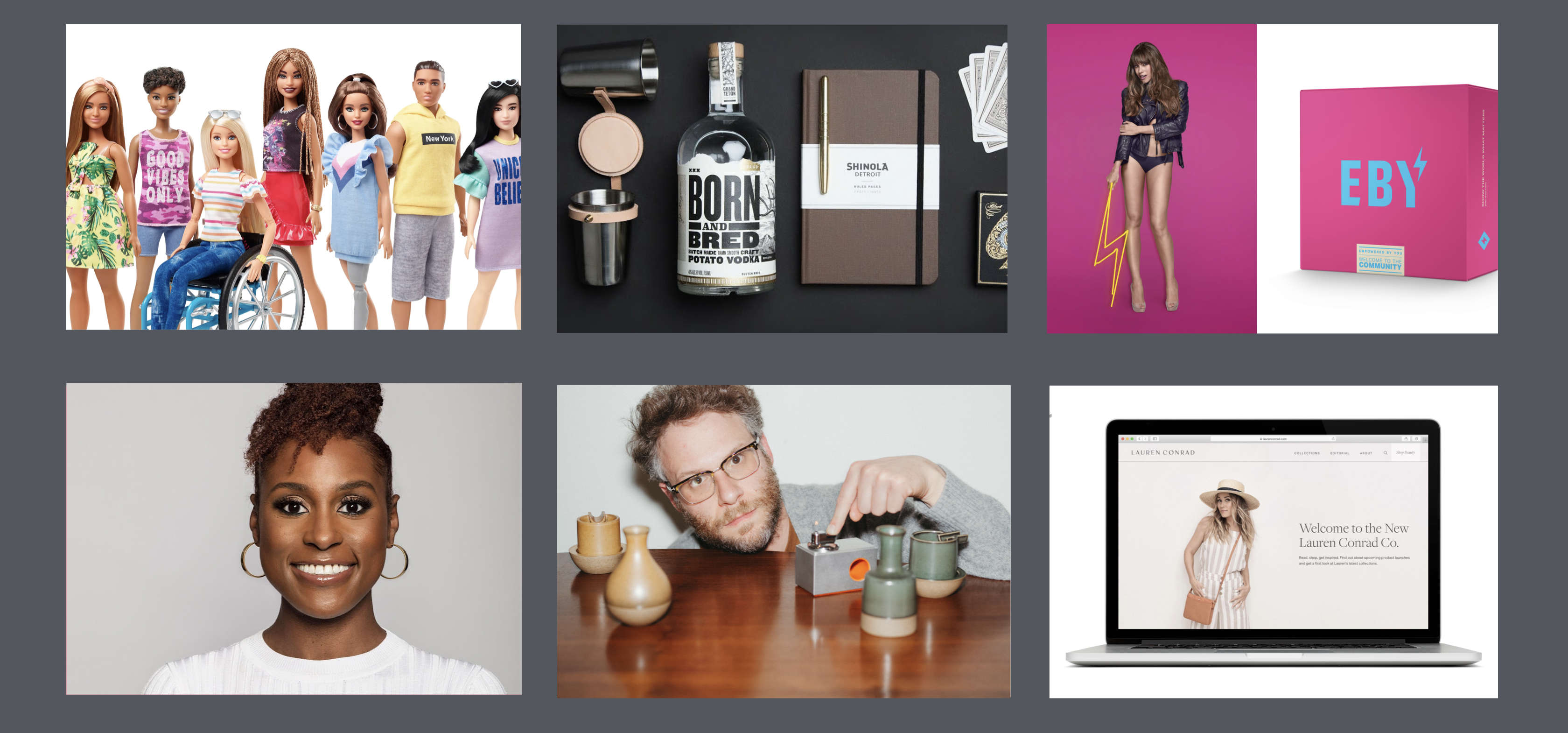
Some of the questions I answered through research

  • How big is the market for men’s grooming products developed by a celebrity, and what are the unmet needs that align with said celebrity?
  • Is there still equity in the Miramax brand?
  • How could we build a new parenting brand?
  • How attached are drinkers to several vodka brands and where is “white space” for a new brand owned by Channing Tatum?
  • How could a famous comedian re-deploy her platform to drive turnout in the 2016 election cycle?

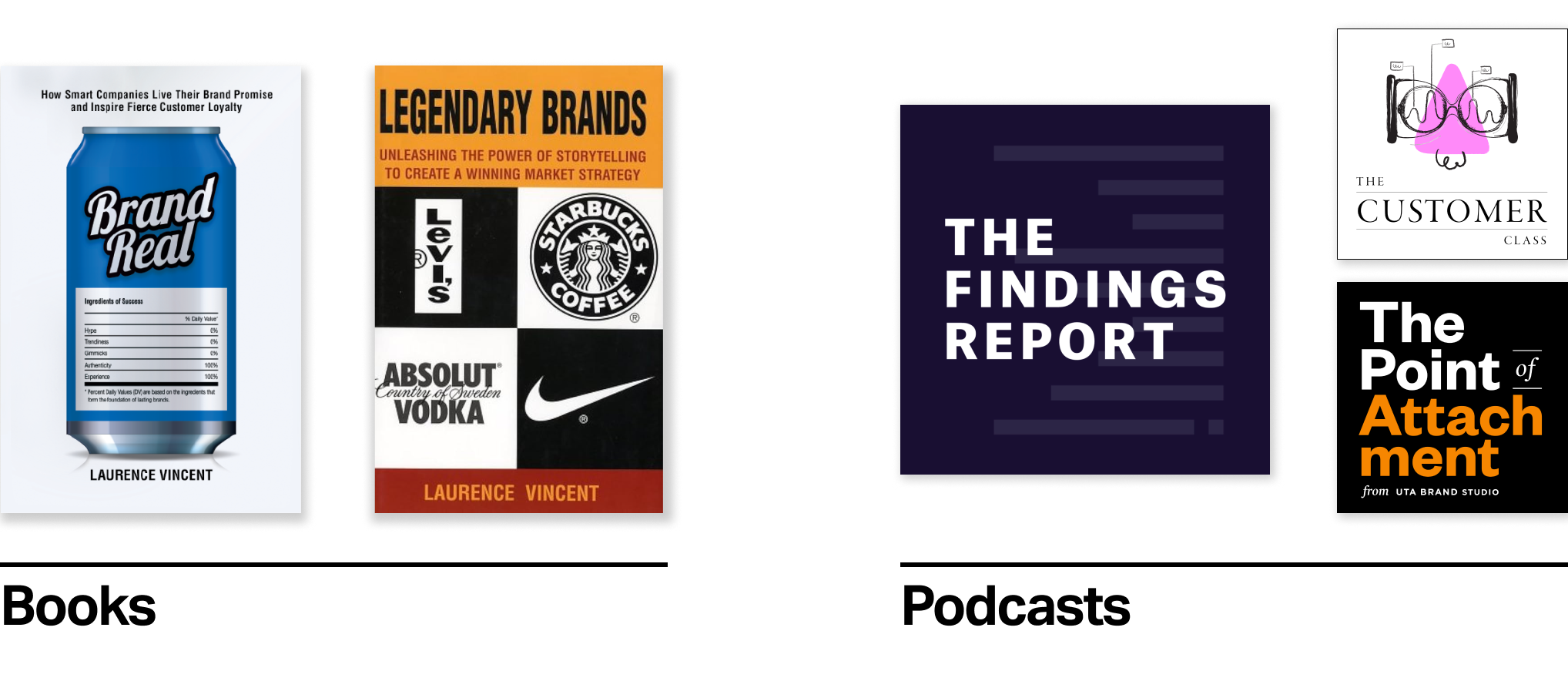
My books and podcasts

Course Overview

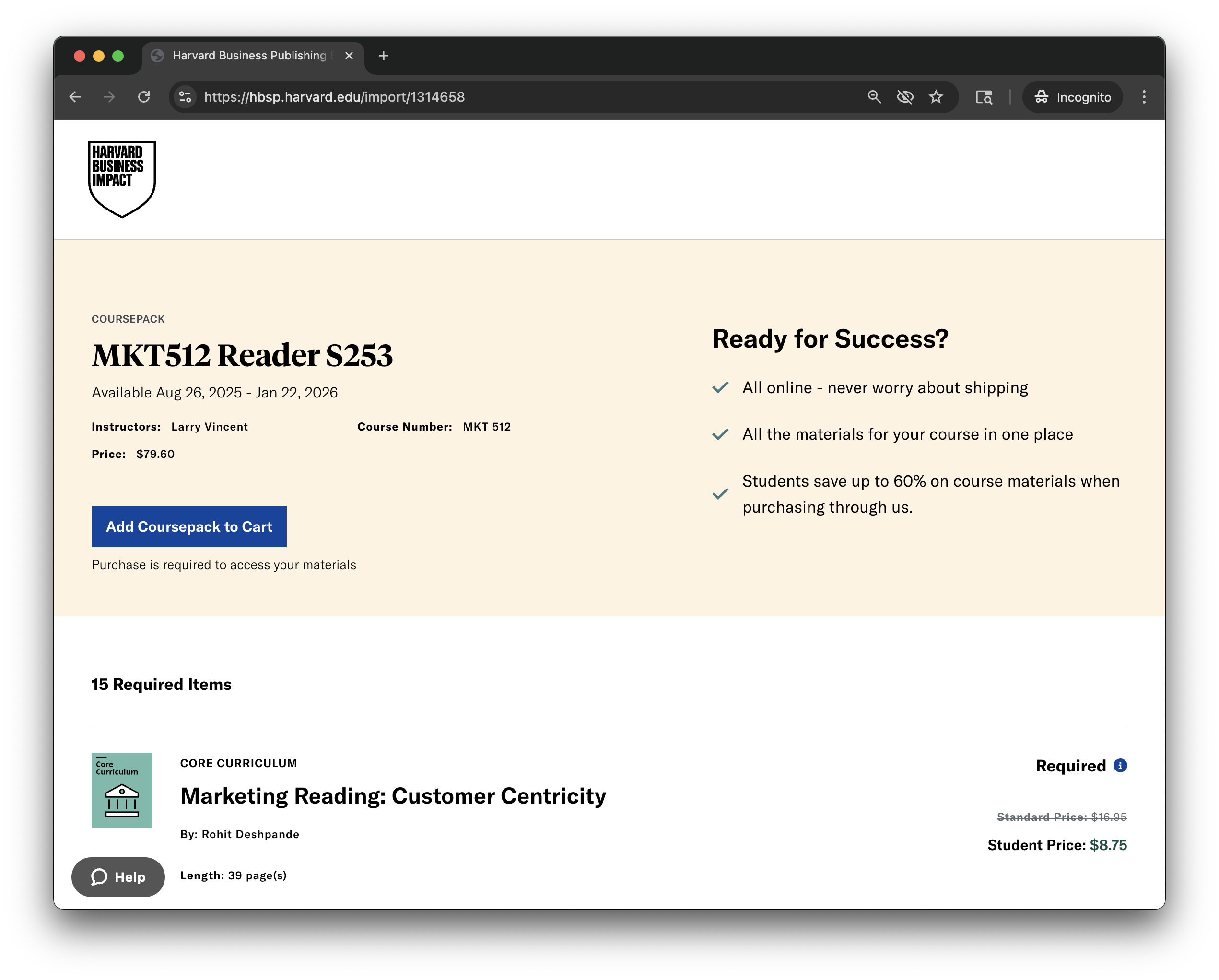
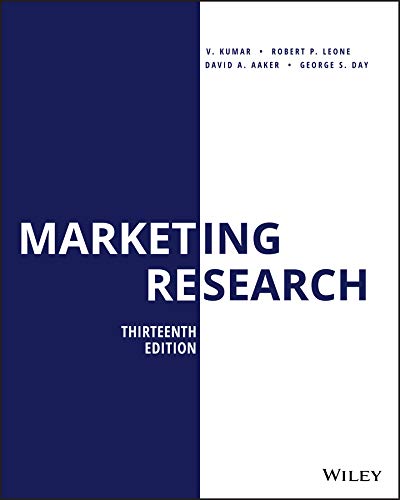
Course Reader

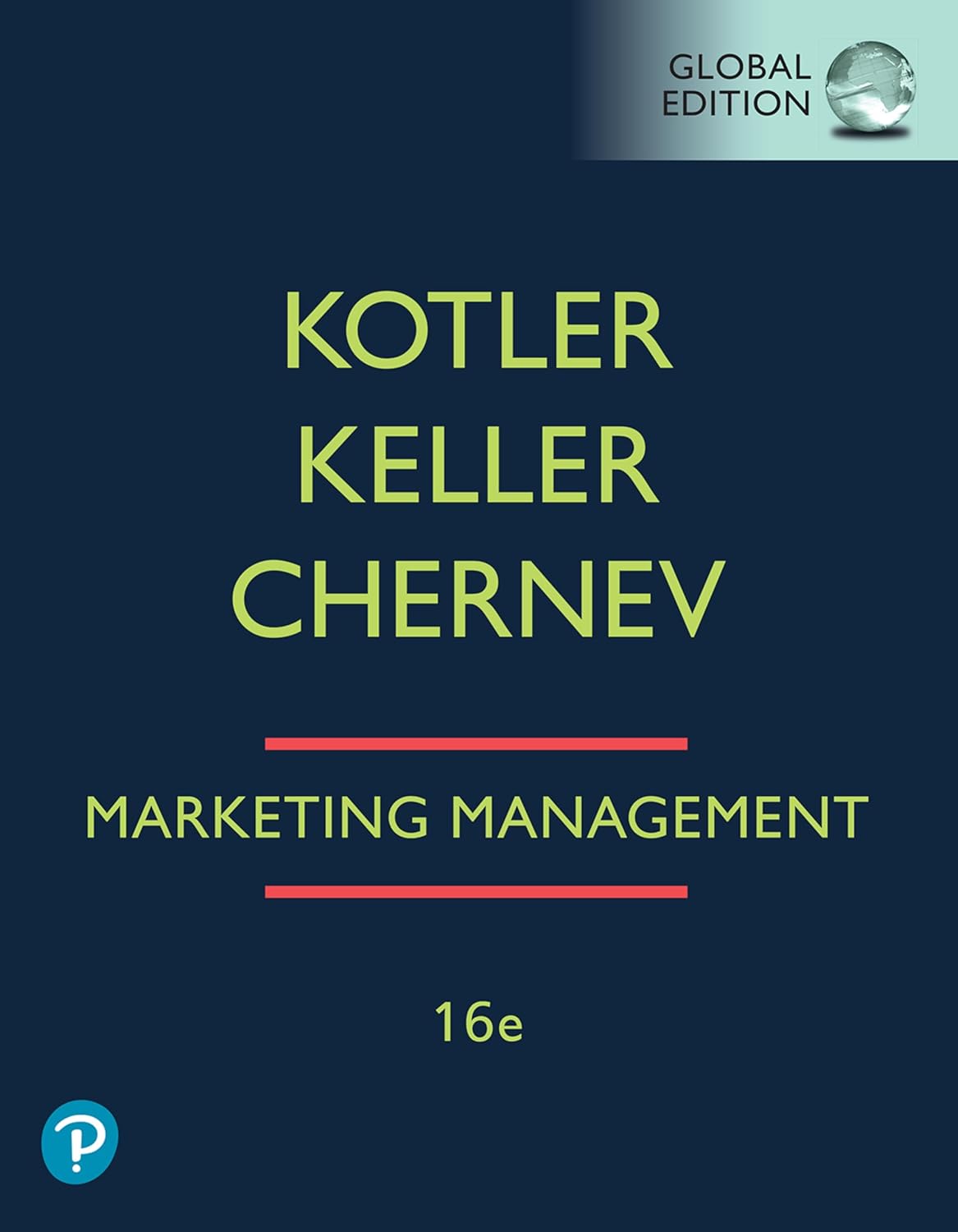
Optional Reading

Software

This is a hands-on course that requires tools for data collection and analysis.

  • Data Collection–You will need the Qualtrics survey platform, which is free to all USC students.
  • Data Analysis–Excel works for most analysis but software such as R, Python, JMP, or Tableau is recommended.
  • Data Storytelling–Most students use PowerPoint, Google Slides, Canva, etc. I use the Quarto document system (more on this later).

Statistical Prerequisite

You should be able to…

  • Calculate descriptive statistics such as counts, proportions, means, variance, etc.
  • Perform statistical tests such as chi-square, t.test, ANOVA, correlation, etc.
  • Create and analyze simple linear regression models.
  • Nice to have but not required: experience with cluster and factor analysis.

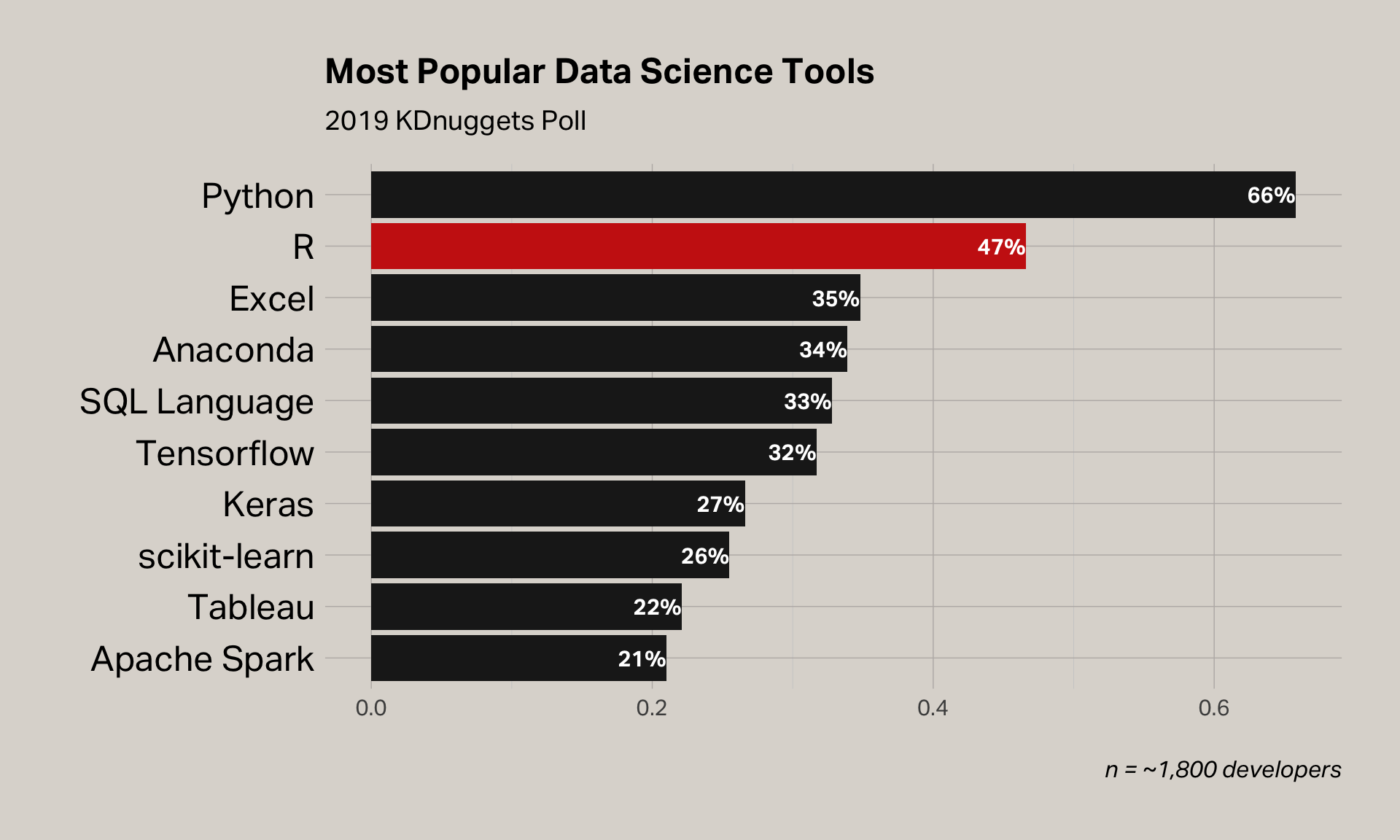
R is not required

  • I use R for my analysis.
  • I post my R code for reference.
  • This is not a course on R.
  • You will not be tested on R.

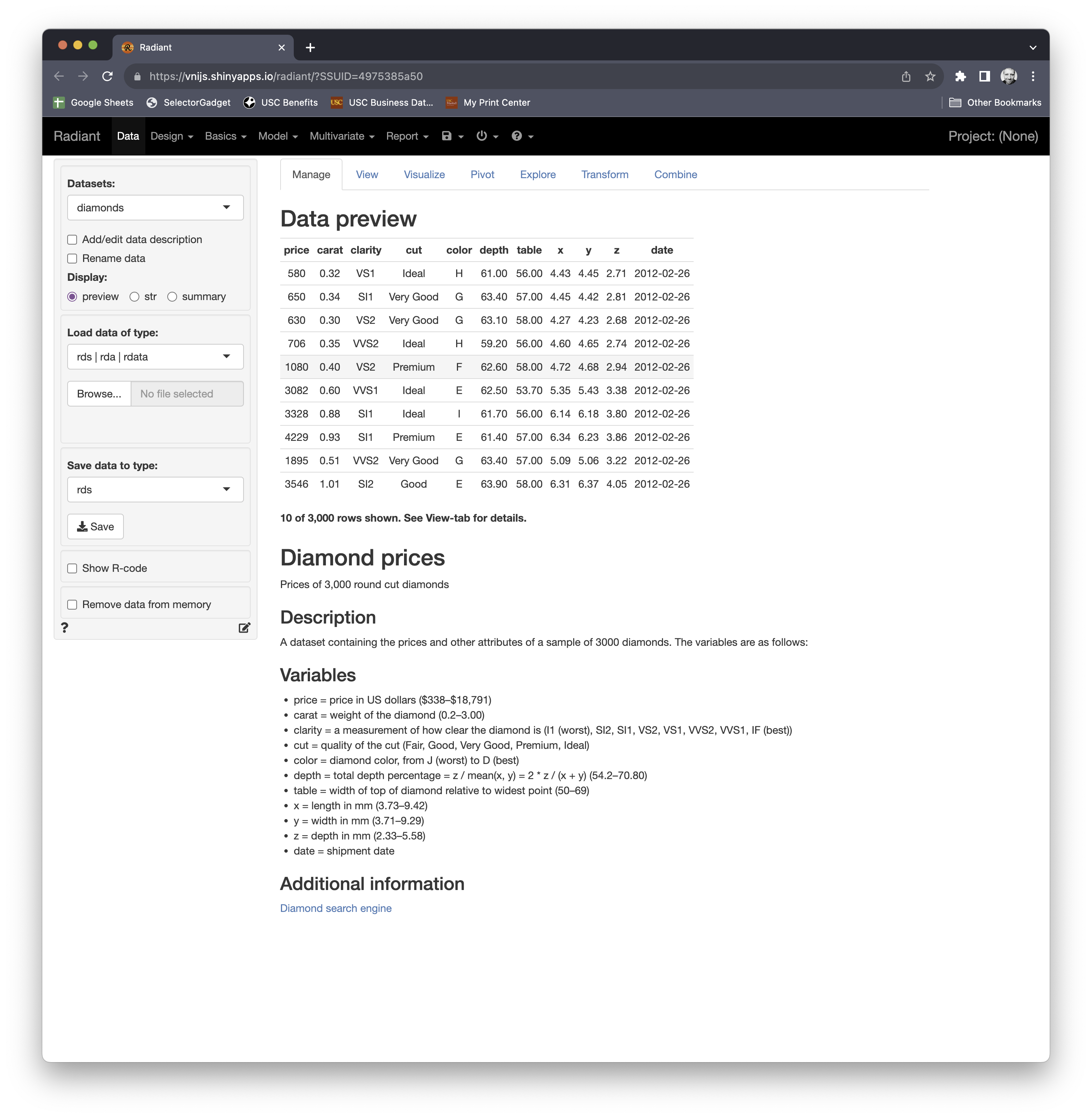
Radiant

Radiant is an open-source platform-independent browser-based interface for business analytics in R.

  • Used by many students
  • Free
  • R foundation;
    user-friendly

Using AI and Code

  • AI platforms are good at writing code for R or Python.
  • If you are new to coding, AI has been found to be a good platform to accelerate learning and analysis.
  • USC students have access to Copilot, which is used by DSO for a lot of analytic coursework.
  • Be careful: AI code is not always correct.

Grading

% of Grade Points
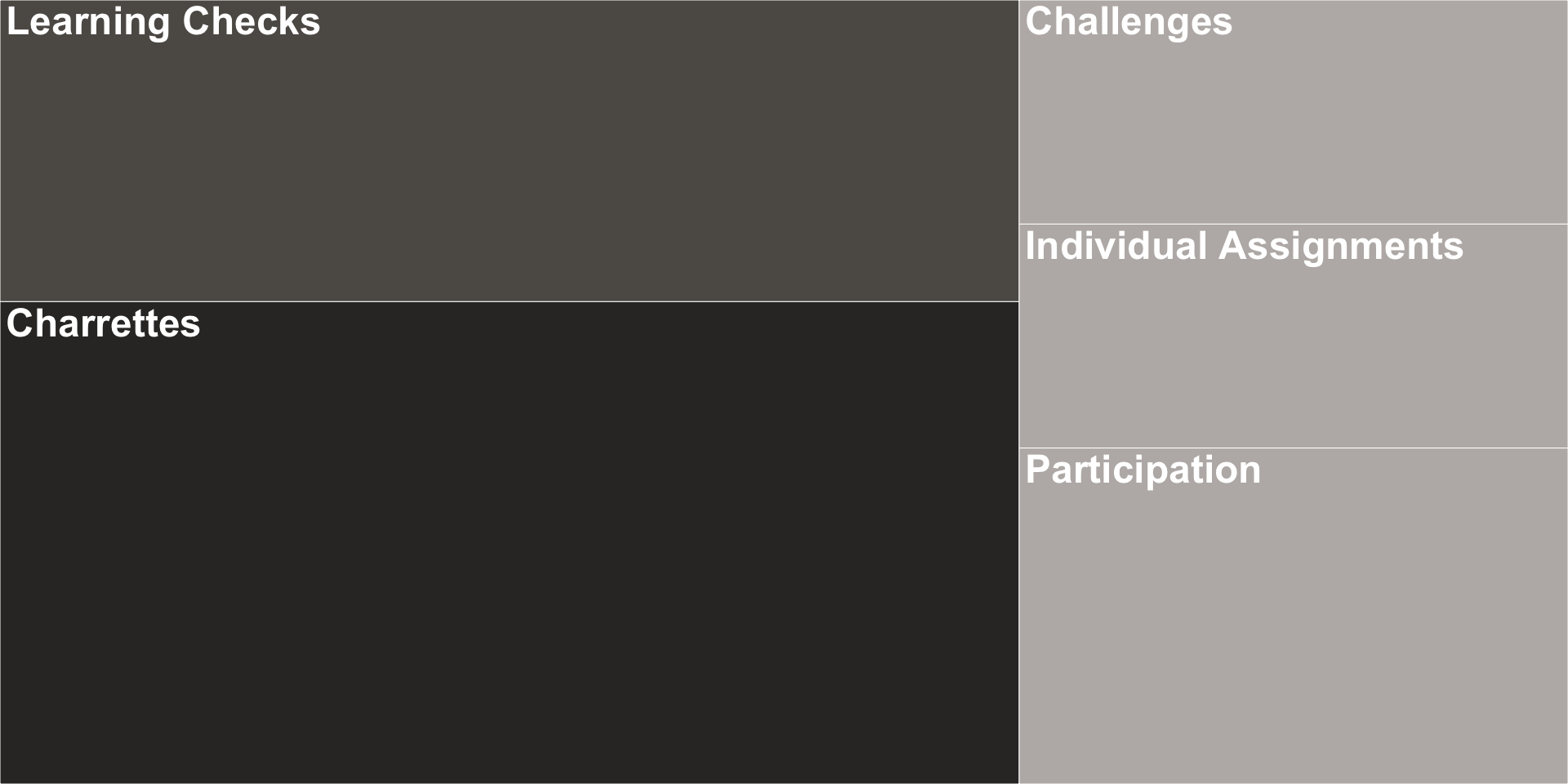
Class Participation 15% 15
Challenges 10% 10
Individual Assignments (2) 10% 10
Learning Checks (2 of 3) 25% 25
Charrettes (4) 40% 40
Total 100% 100

Grade Composition

Learning Checks

  • Designed to be taken in about 30 minutes.
  • Multiple choice and true/false format.
  • Lowest score will be dropped.
  • No rescheduling or makeups on learning checks.

There is no final exam
for this course.

( You’re welcome )

Participation

Quality > Quantity

Data can be dangerous

Participation Matters

Participation = Leadership

Seating

A seating chart will be circulated at the next class. Once you choose a seat, please sit in the same assigned seat for all classes. Seats are assigned so that…

  • I can learn your names quickly.
  • We can credit you for attendance.
  • We can ensure you get credit for participation.

Attendance

  • Attendance is not graded; however, excessive absence can lead to a lower course grade.
  • If you aren’t in class, you can’t earn participation credit.
  • If you must miss class, be sure to review materials from missed sessions.

Charrettes

Hands-on, group research projects.

Charrette Schedule

There are four charrettes, all team-based. The read-out from the last one is on the day scheduled for our final exam.

C1
Freestyle
Feb 05

C2
KCRW  
Feb 26

C3
Qualitative
Mar 31

C4
Experiment
May 12

KCRW

The Brief

Mission

Redesign a sustainable public-media membership model for a post-broadcast world

The problem

KCRW’s membership pipeline is dependent on legacy broadcast patterns (pledge drives, linear listening habits). Digital audiences listen but don’t convert to membership.

The prompt

If you were starting from zero today—no broadcast legacy—how would you design a membership program that authentically fits KCRW’s brand but aligns with digital consumption?

Considerations

Segmentation, pricing psychology, friction points, LTV modeling, bundling, and acquisition funnels

I used some slides from my group project at my interview yesterday and they called me back for another interview.

Former Student, Class of 2023

Charrette Process

  • Kick-off with an in-class briefing
  • 3-4 weeks to design study and conduct fieldwork
  • In-class experiences to help you refine the work
  • A selection of teams will present to class during an interactive “crit session” designed to explore the work
    (each team will present twice during the semester)

Benefits

  • Goal: Give you many “at bats” to practice doing research
  • Format: Deliberately borrows from art and design to foster a more creative and fun approach to learning research
  • Relevance: Provides you with good practice at data storytelling and presenting work to employers and other decision-makers
  • Assets: Your projects are excellent case studies for recruiting

Working together
and what to expect.

Communications

  • All assignments and in-class materials posted to Brightspace.
  • Check Brightspace for case discussion study questions.
  • Submit all deliverables on Brightspace.
  • You can also reach out to me on Slack.
  • If you email me, please copy our TA, Hannah Rhodes.

Slides

  • Slides are provided to you as a convenience.
  • Slides are not a complete record of classes.
  • I create my slides using Quarto, a documentation system built in javascript for use with R and Python.
  • You can create PDFs of the slides for study purposes.

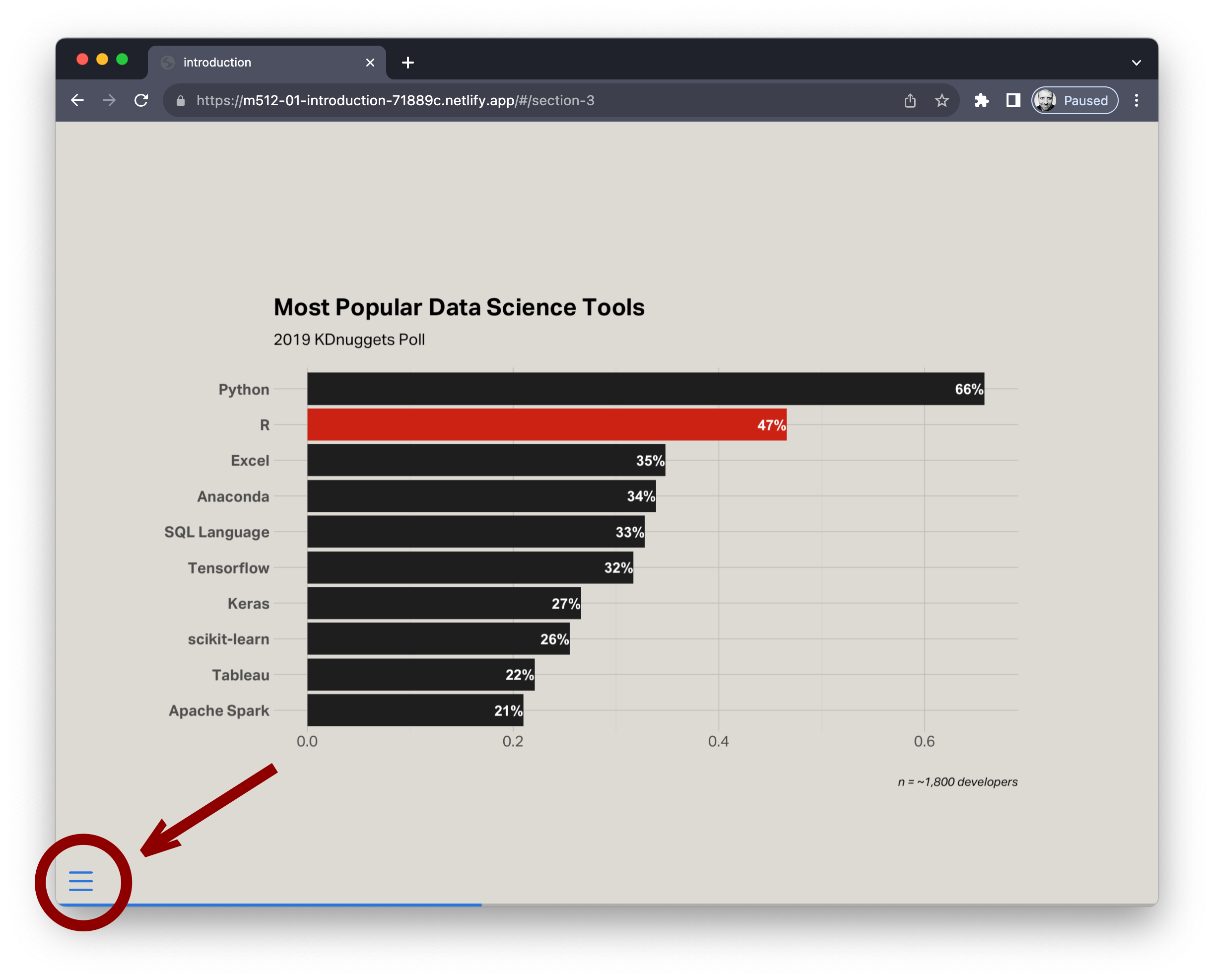
Creating slide deck PDFs

Creating slide deck PDFs
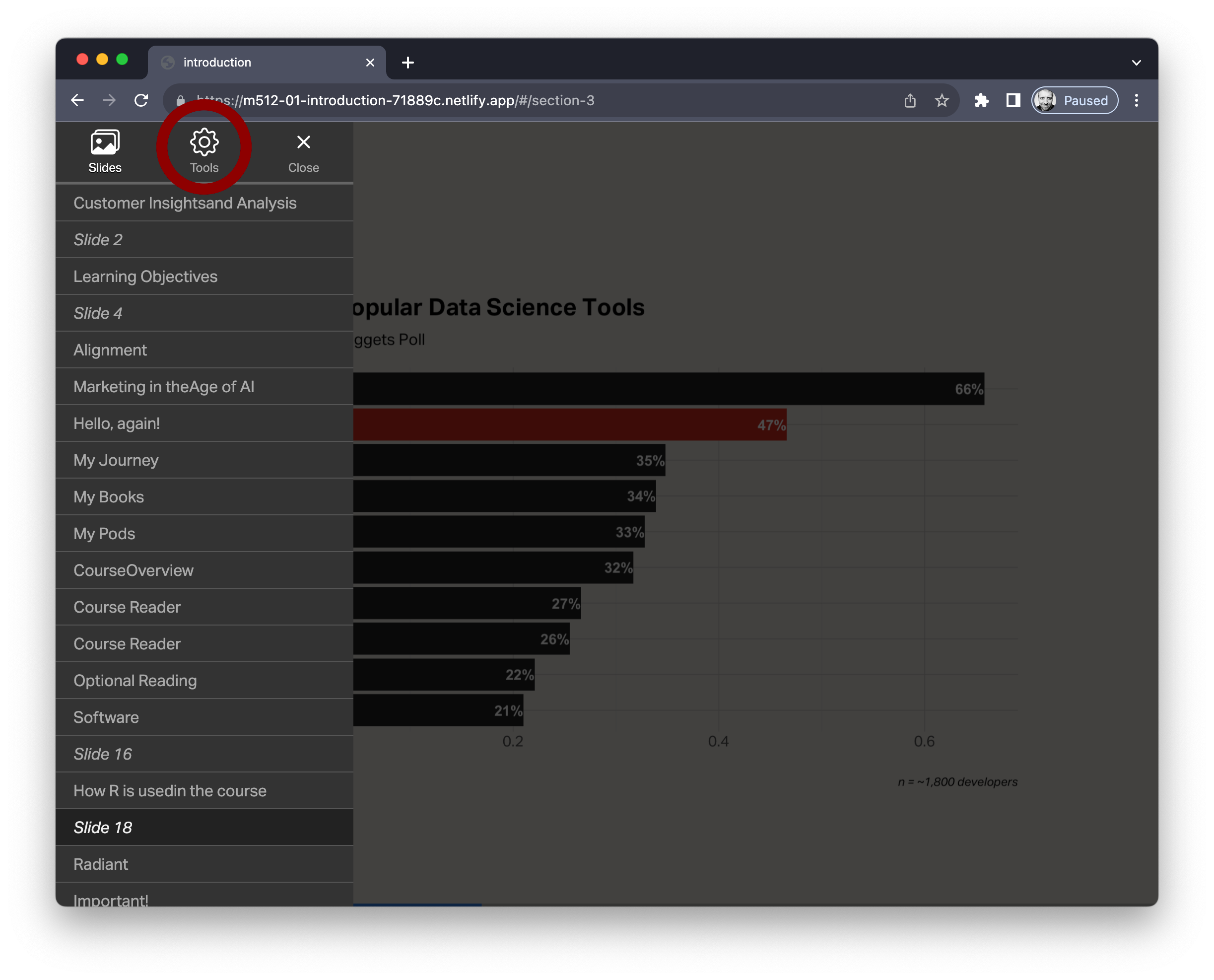
Creating slide deck PDFs
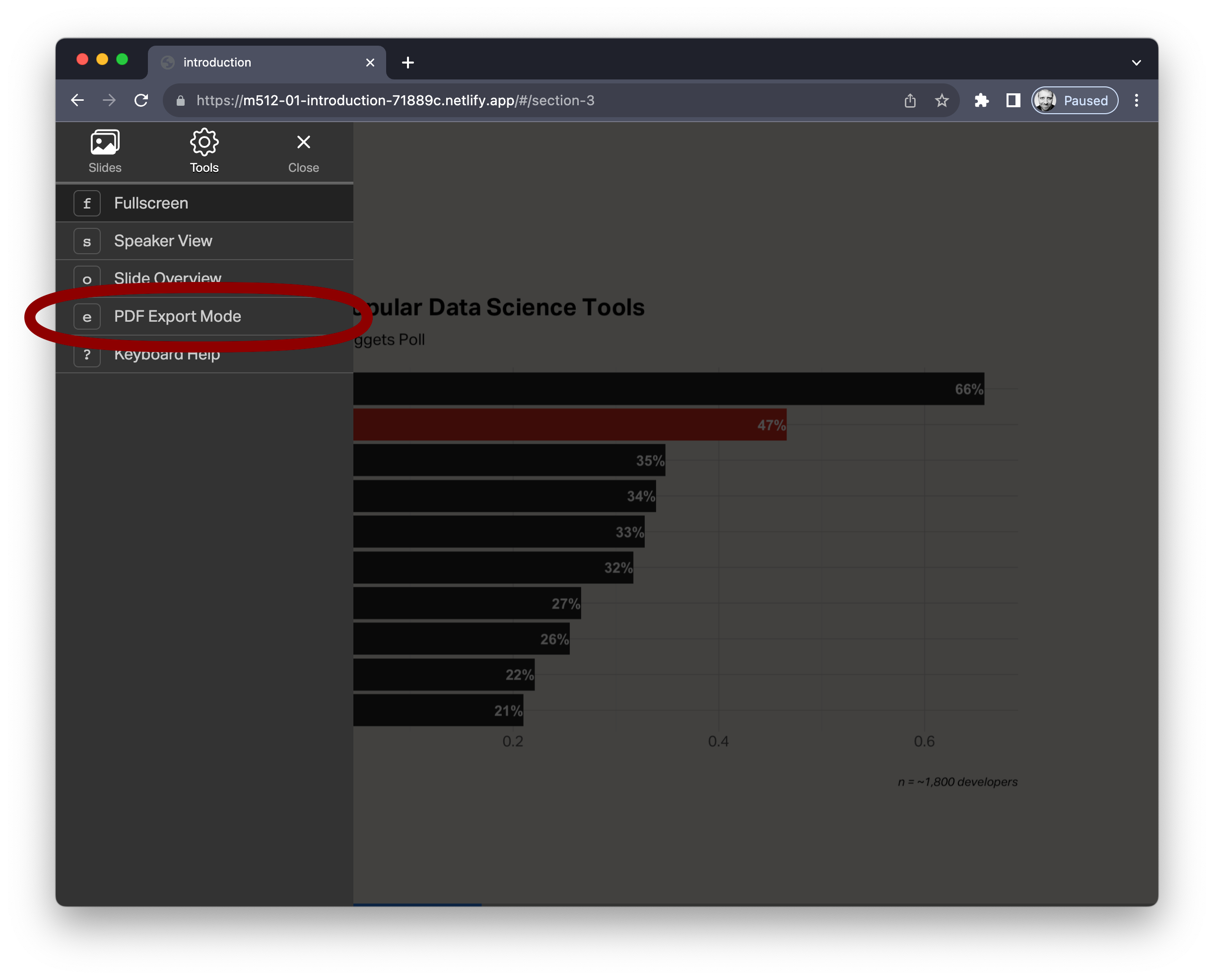
Creating slide deck PDFs
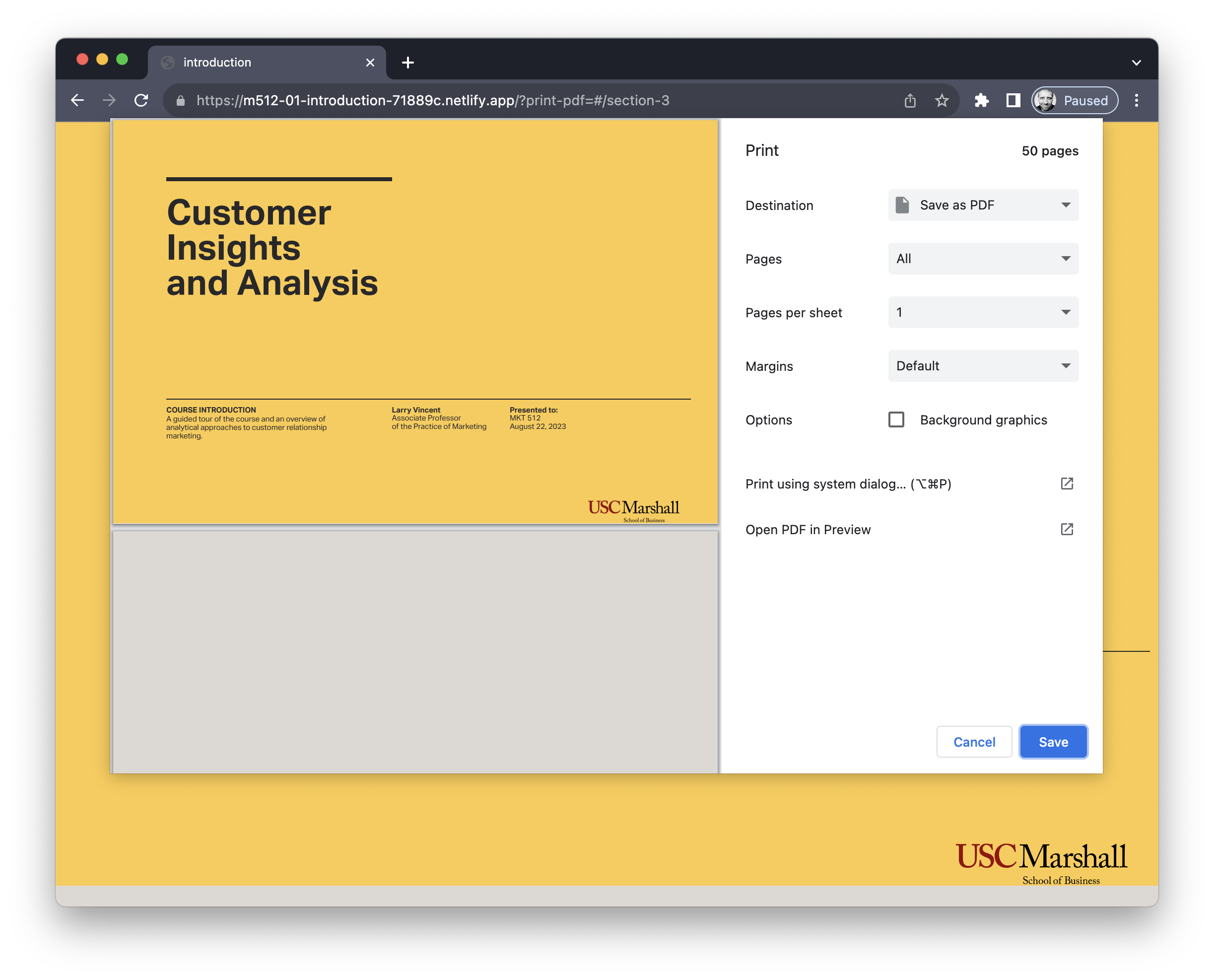
Electronic Devices

The class is better when
you are fully present!

  • Electronic devices MAY be used for note taking and reviewing course materials only.
  • No devices during case discussions.
  • If devices become distracting, I may ask you to put them away.

Artificial Intelligence

I expect and encourage you to use AI in this course

  • DO use AI to brainstorm and “workshop” your ideas.
  • DO refine your AI prompts and go beyond the first results.
  • DO verify and double check suggestions provided by AI.
  • DO acknowledge your use of AI by citing properly in your assignments and other deliverables.
  • DO be thoughtful about the appropriateness of using AI in an assignment and what it means.
  • DON’T use AI on any assessment without permission.

Marketing in the age of AI

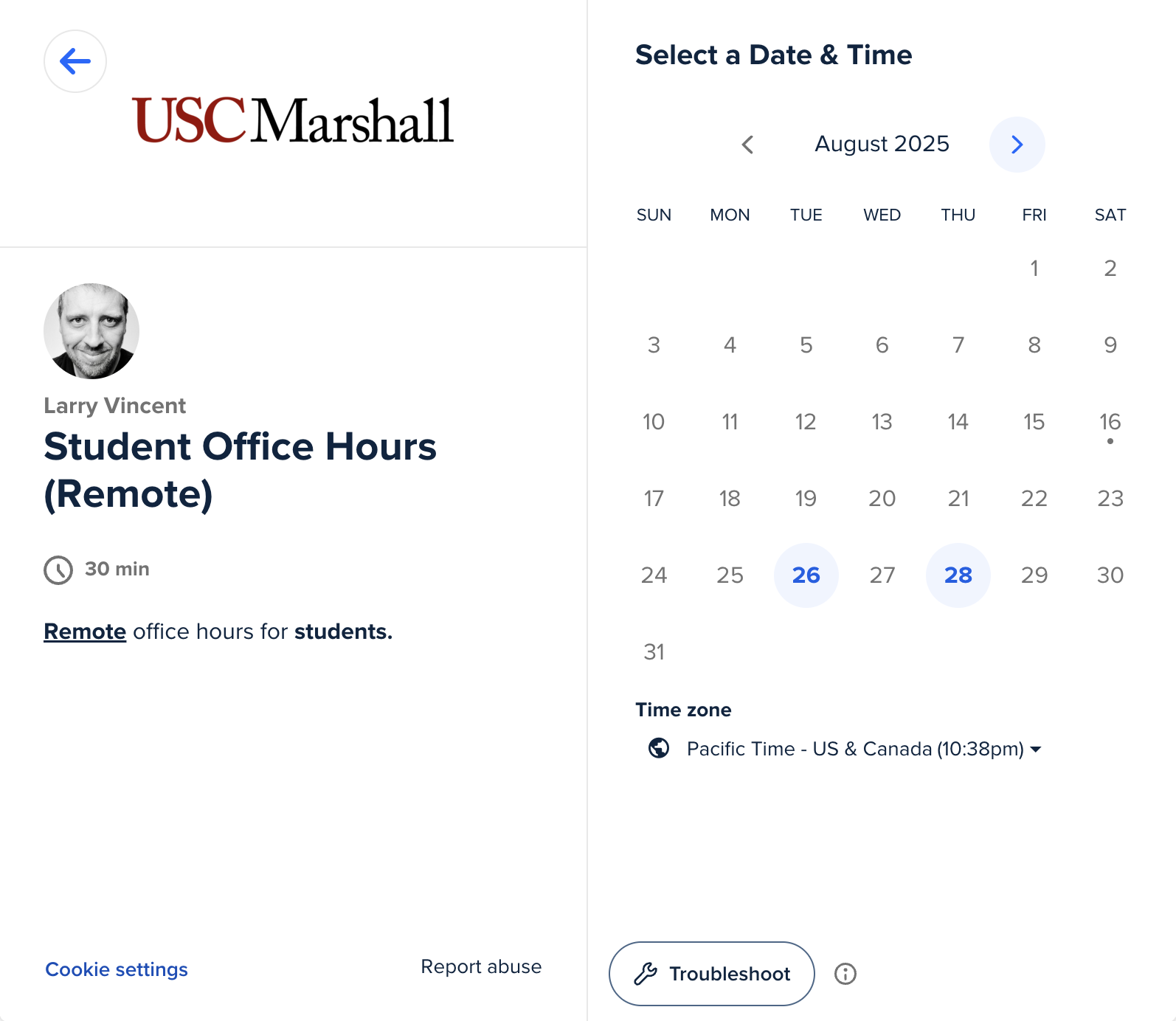
Office hours

  • Available by appointment on Calendly (see syllabus for link).
  • You can meet with me in groups, if you prefer.
  • Not limited to course-related topics :)
For Thursday

  • Review syllabus.
  • Complete pre-semester profiling survey.
  • Acquire Coursepack–read first articles.
  • Find a team.